The Canadian Nuclear Isotope Council (CNIC) team recently had the opportunity to tour the Brain Imaging Centre at The Royal, our newest Health Partner, and visit their colleagues at the University of Ottawa Heart Institute’s Radiochemistry Laboratory to learn how the organizations have partnered to support brain and cardiac health research.
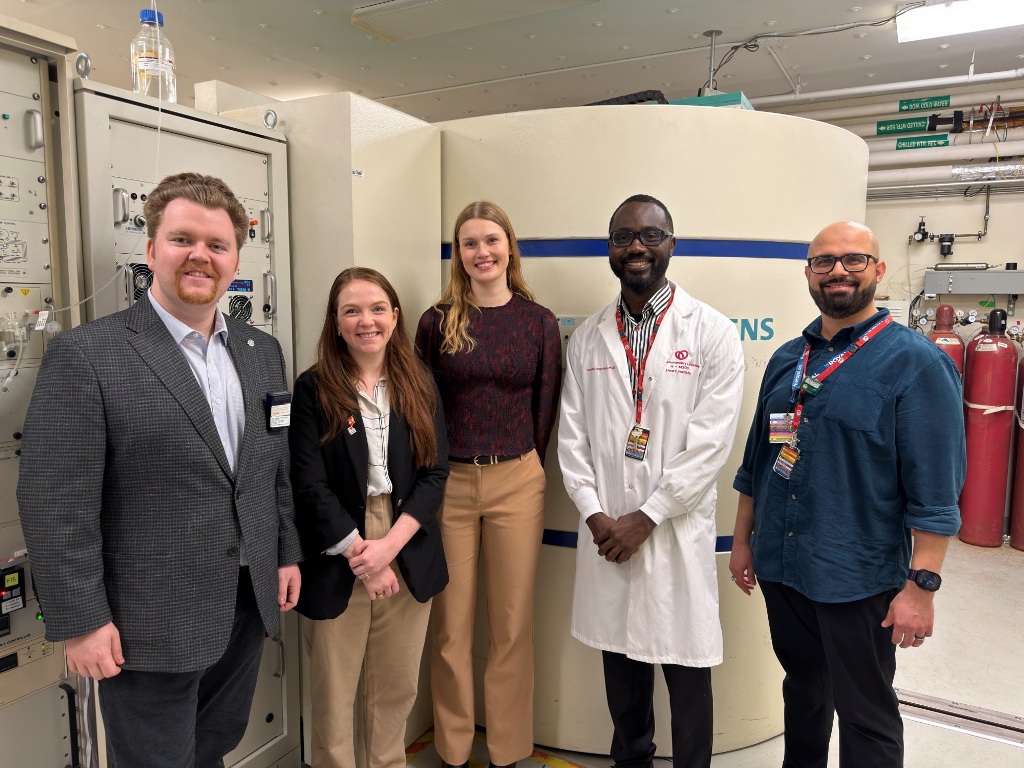
Our visit to The Royal and the University of Ottawa Heart Institute (UOHI) began at UOHI’s Radiochemistry Laboratory, which is home to an 11 MeV Siemens cyclotron. The cyclotron, which is central to the collaboration between the two organizations, produces several isotopes, including Fluorine-18 and Carbon-11. These short-lived isotopes are processed on-site and power Positron Emission Tomography (PET) imaging at both UOHI and The Royal.
Working with time-sensitive products, UOHI has innovated to ensure the safe and efficient delivery of radiopharmaceuticals. The radiopharmaceuticals used at UOHI are safely transported through a specially designed motorized track that delivers each dose directly to the scan room through a standalone tunnel. Once safely delivered, a technologist receives the dose and proceeds with the injection and scanning process.
UOHI has also pioneered a generator technology for the production and dosing of Rubidium-82 for cardiac PET imaging, all taking place right next to a patient’s bedside. Designed and developed by UOHI expert physicians, this system allows safe, ultra-low radiation scans to assess blood flow and coronary artery disease in patients.
The radiopharmaceuticals produced in the UOHI cyclotron for use at The Royal are safely packaged and shielded before making the short journey to The Royal, which is located less than two kilometres away.
Following our visit to UOHI’s Radiochemistry Laboratory and PET facilities, we continued on the same journey that those radiopharmaceuticals take and arrived at The Royal for our tour of the Brain Imaging Centre.
Upon arrival at The Royal, we were welcomed into the facility where their critical research takes place, which clearly reflected their guiding principle that “research is care.” This care for their patients became immediately clear, not just through our conversations with their dedicated staff, but through the innovative technology and resources that The Royal is home to. The Royal is home to one of Canada’s only platforms capable of simultaneous tri-modal imaging using PET, Magnetic Resonance Imaging (MRI), and Electroencephalography (EEG). This scanner (pictured below, from the control room) allows researchers to simultaneously examine brain chemistry, structure, and electrical activity. This unique ability deepens our understanding of complex disorders and enables the groundbreaking research that the team at The Royal leads every day.
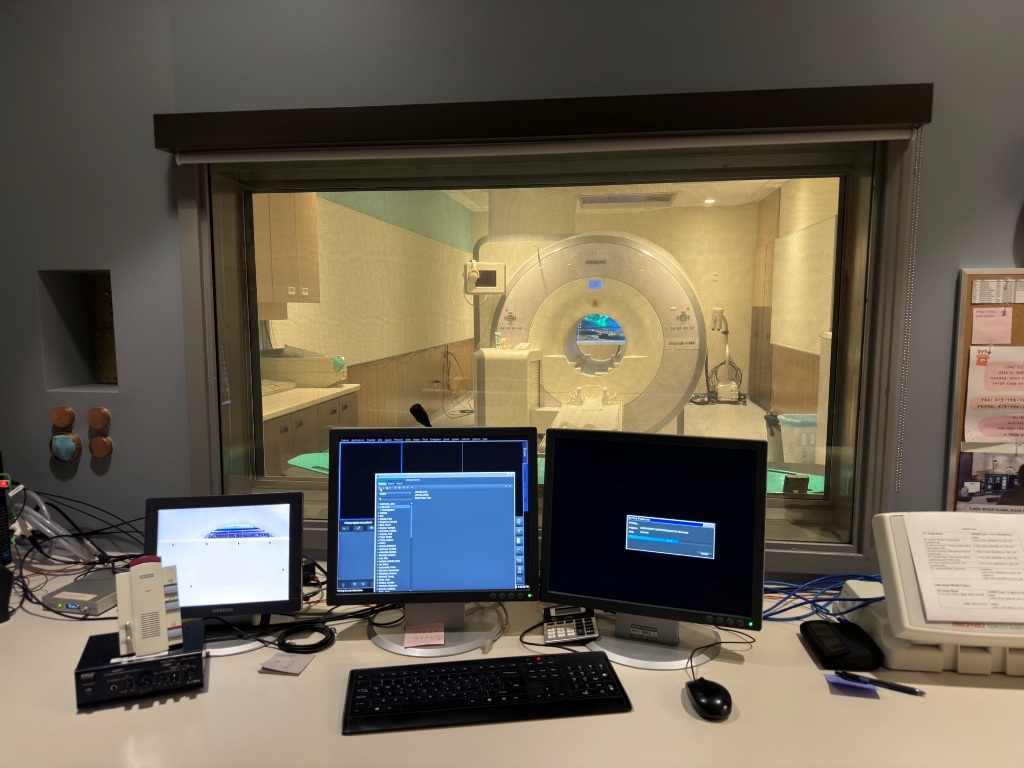
The Royal is also home to a full-scale replica of their scanner, which is used to familiarize patients with the experience of being in and around the machinery ahead of their actual scan. For patients suffering from claustrophobia and other similar conditions, this simple resource makes their experience much more comfortable.
On behalf of the CNIC team, thank you to Hussein, Christian, Ben, Karine, and the teams at both the UOHI and The Royal for their generosity in welcoming us to their facilities. We left feeling inspired by the work they lead and the role that Canadian isotope innovation plays in supporting their patients.
Learn more about UOHI on their website here: https://www.ottawaheart.ca/
Learn more about The Royal on their website here: https://www.theroyal.ca/